Types and Functions of Medical Gas Alarms
News Details
A hospital gas pipeline can fail quietly. Pressure may drop slowly, a cylinder bank may run empty, or a compressor may stop at night. Nobody notices — until a ventilator loses supply. Medical gas alarm systems exist to prevent exactly that. They watch the pipelines around the clock and warn staff before a small fault becomes a patient risk. This guide explains the main types and what each one does.
What Is a Medical Gas Alarm System?
A medical gas alarm system is a monitoring panel that tracks the pressure of piped medical gases and vacuum. Each gas service has its own channel. When a reading moves outside its safe band, the panel shows a visual signal and sounds an audible alert.
Alarms do not fix problems. Their job is to give staff time: time to switch to a reserve cylinder bank, time to call the engineering team, time to protect patients before supply fails.
Why Medical Gas Alarms Matter
Oxygen, medical air, and vacuum support life directly. Standards such as NFPA 99 and ISO 7396-1 therefore require alarms at defined points in every pipeline system. A well-placed alarm system:
- Catches pressure changes early, while staff can still act calmly
- Covers source equipment, which staff do not visit every hour
- Supports hospital accreditation and regular safety audits
- Creates a record of events that helps engineers find causes, not just symptoms
Type 1: Master (Source) Alarms
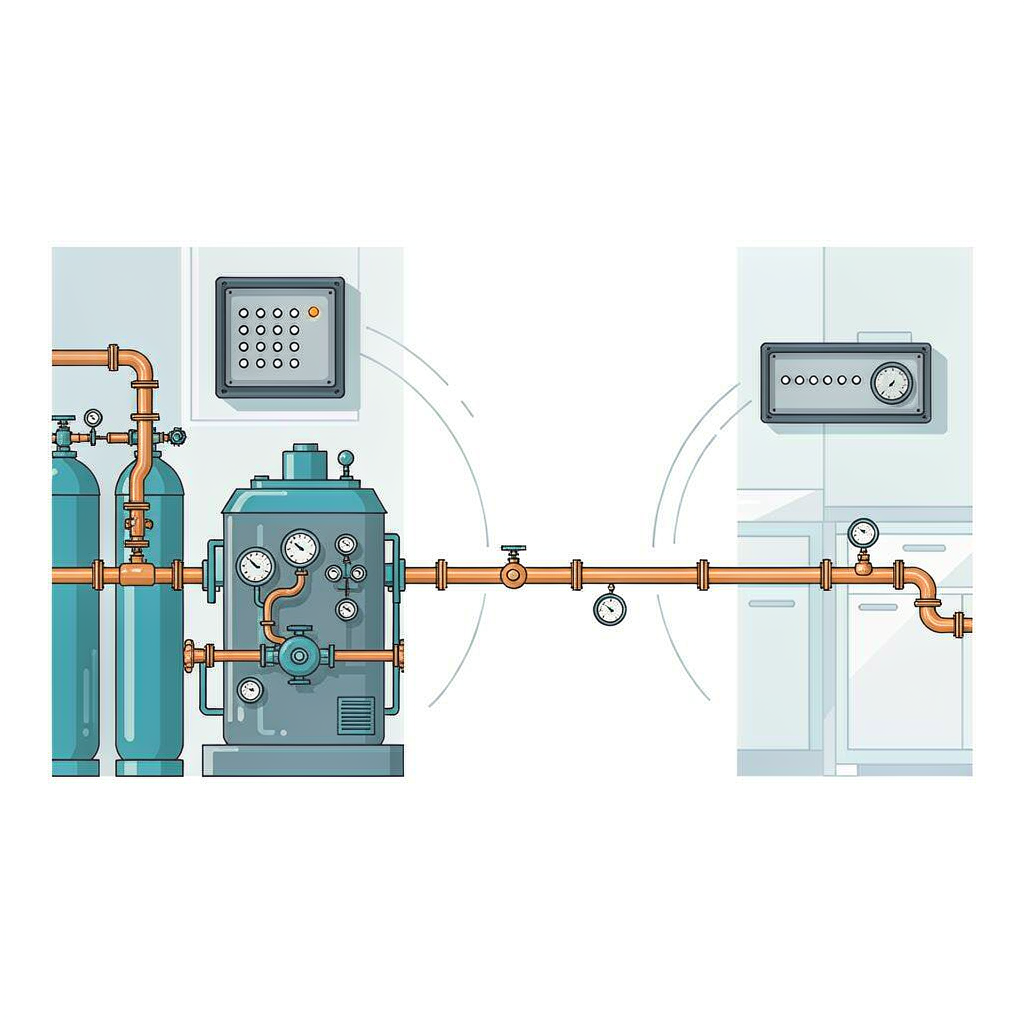
A master alarm panel monitors the gas source equipment: cylinder manifolds, oxygen generators, compressors, and vacuum plants. It is usually installed in places where technical staff work, such as the plant room, an engineering office, or a security desk.
Typical master alarm functions include:
- High and low line pressure alerts for each gas
- Changeover status of the cylinder manifold — so staff know the reserve bank is in use
- Liquid oxygen tank level monitoring
- Remote signalling to a building management system (BMS)
Master alarms are the first line of defence, because they watch the supply before it reaches the wards.
Type 2: Area Alarms
An area alarm panel monitors the gas pressure in one zone — a ward, an ICU, or a group of operating theatres. It sits downstream of the zone valve, usually at the nurses' station or in the corridor.
Area alarms face clinical staff, so their readings must be easy to read at a glance. Common functions include:
- Live pressure display for each gas in the zone
- Visual and audible alerts when pressure rises or falls out of range
- A mute button that silences the sounder while the visual indicator stays lit
- Set-points that can be adjusted on site for each gas
If an area alarm sounds, nursing staff know the supply to their own bedsides may be affected — even before patients or equipment show a problem.
Type 3: Local and Integrated Alarms
Smaller monitoring units complete the picture:
- Gauges and sensor points — analog or digital gauges at key positions in the pipeline give a direct local reading.
- Valve boxes with built-in alarms — some zone valve boxes integrate pressure sensors and an audible/visual alarm, combining shut-off and monitoring in one wall unit.
- Networked central monitoring — larger hospitals connect all panels to one monitoring system, so every zone is visible from a single screen, with event logs and remote alerts.
Core Functions Shared by All Types
- Continuous pressure monitoring — one independent channel per gas service
- Visual and audible signals — lights and sounders that work even in a noisy plant room
- Mute with latched indication — the sound can be silenced, but the light stays on until the fault clears
- Event logging — time-stamped records for maintenance and investigation
- Battery backup — monitoring continues during a power cut
- Remote communication — dry contacts or network protocols for BMS integration
Standards That Govern Alarm Systems
- ISO 7396-1 — defines operating, warning, and emergency states for pipeline systems, including alarm behaviour.
- NFPA 99 — sets where master and area alarms must be installed in US-market projects.
- HTM 02-01 — the UK guidance for alarm design, testing, and planned maintenance.
Buyers should match the alarm standard to the destination market and request compliance documents with every order.
What Buyers Should Check Before Ordering
- Which gases and how many channels each panel must cover
- Display type and readability for the installation location
- Battery backup duration and low-power indication
- Set-point adjustment and calibration support
- BMS or remote monitoring protocol compatibility
- Compliance certificates and factory test reports
Alarm panels work hand in hand with the rest of the pipeline. You can see a real example of a pressure detection alarm for hospital gas systems in our medical gas alarm product page, or browse our full centralized oxygen supply product range.
In Summary
Medical gas alarm systems are the watchmen of the pipeline. Master alarms guard the source, area alarms guard each clinical zone, and local units fill the gaps in between. Together they turn silent pressure changes into clear, early warnings. For buyers and distributors, choosing alarms with the right coverage, battery backup, and standard compliance is one of the simplest ways to raise the safety level of a hospital project.


