How do Medical Gas Alarm System work?
News Details
Hospital gas pipelines rarely fail loudly. Pressure drops slowly. A cylinder bank runs empty at night. A compressor stops without warning. Nobody notices — until a ventilator or an anaesthesia machine loses supply. A medical gas alarm system exists to catch these quiet faults early. It watches the pipelines around the clock and warns staff while there is still time to act. This article explains how it works, step by step, in plain language.
What a Medical Gas Alarm System Does
A medical gas alarm system is a monitoring panel connected to pressure sensors on the pipeline. It does not control the gas flow, and it does not fix problems. Its job is simple: watch the pressure of each gas service, compare it with safe limits, and alert staff the moment a reading moves out of range.
Because oxygen, medical air, and vacuum support patients directly, standards such as NFPA 99 and ISO 7396-1 require alarms at defined points in every pipeline system.
Step 1: A Sensor Measures the Line Pressure
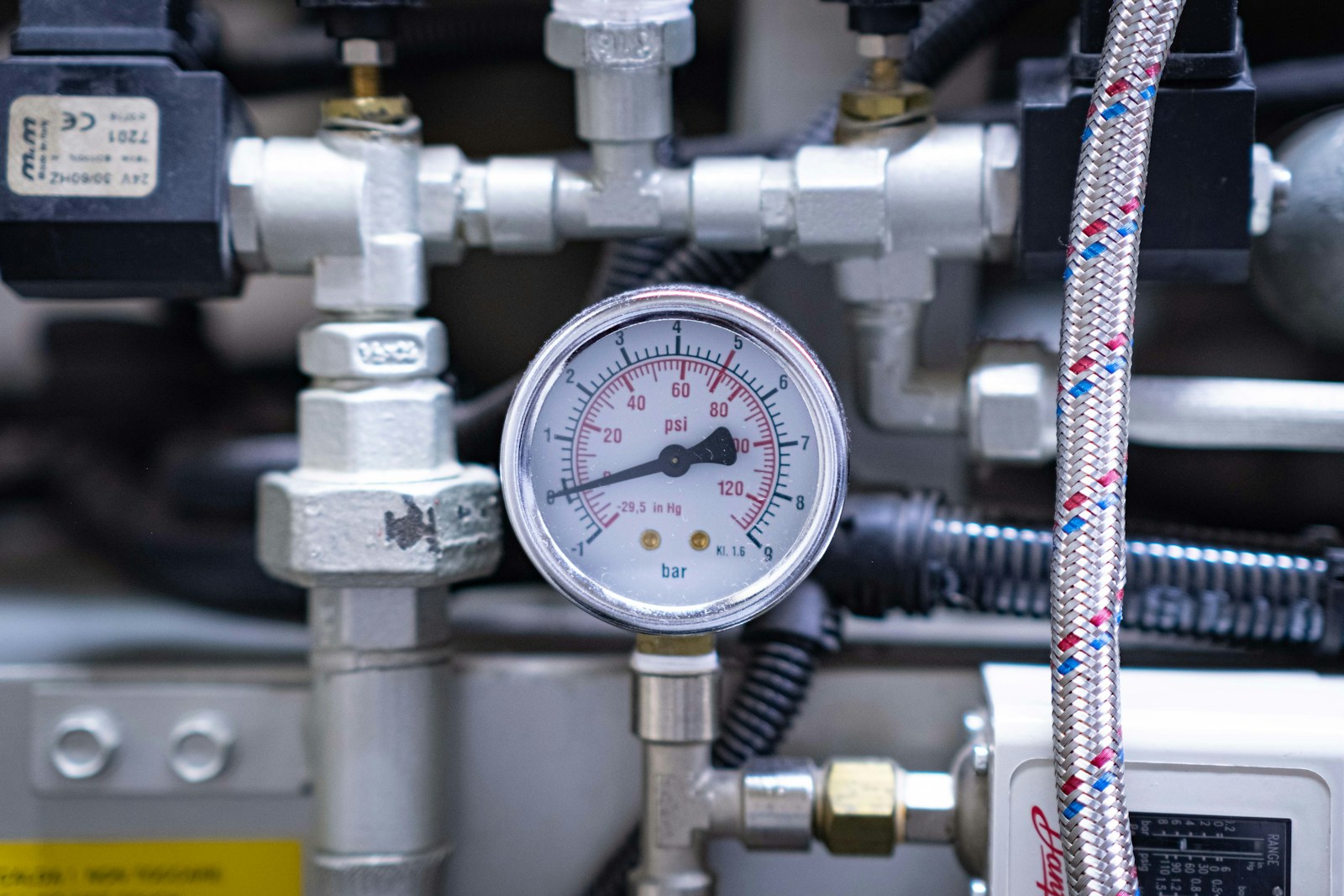
Each gas service — oxygen, medical air, nitrous oxide, vacuum — has its own pressure sensor on the pipe. The sensor converts the line pressure into an electrical signal. One gas, one channel. This separation matters: a fault on the oxygen line must never hide behind a normal reading on the air line.
Step 2: The Panel Compares the Reading with Safe Limits
Inside the panel, each channel has two set-points: a low limit and a high limit. Together they define the safe band for that gas. The panel checks the live reading against this band continuously.
- Reading inside the band → the display stays normal.
- Reading above the high limit or below the low limit → the panel switches to alarm state.
Good panels let engineers adjust these set-points on site, so the limits match the actual design pressure of the hospital's pipeline.
Step 3: The Panel Signals Staff
When a reading leaves the safe band, the panel raises both a visual and an audible alert. A light shows which gas and which condition (high or low) triggered the alarm, and a sounder calls attention even in a noisy plant room.
A key detail: pressing the mute button silences the sounder, but the light stays on until the fault clears. The alarm state is latched, so a problem cannot be "acknowledged away" and forgotten. If a second, separate fault appears while the first is muted, a well-designed panel sounds again.
Where the Alarms Sit in the Hospital
A complete alarm system places panels at two levels:
- Master (source) alarms — installed near the plant room or an engineering office. They watch the source equipment: cylinder manifolds, oxygen generators, compressors, and vacuum plants. They also track manifold changeover status and liquid oxygen tank levels.
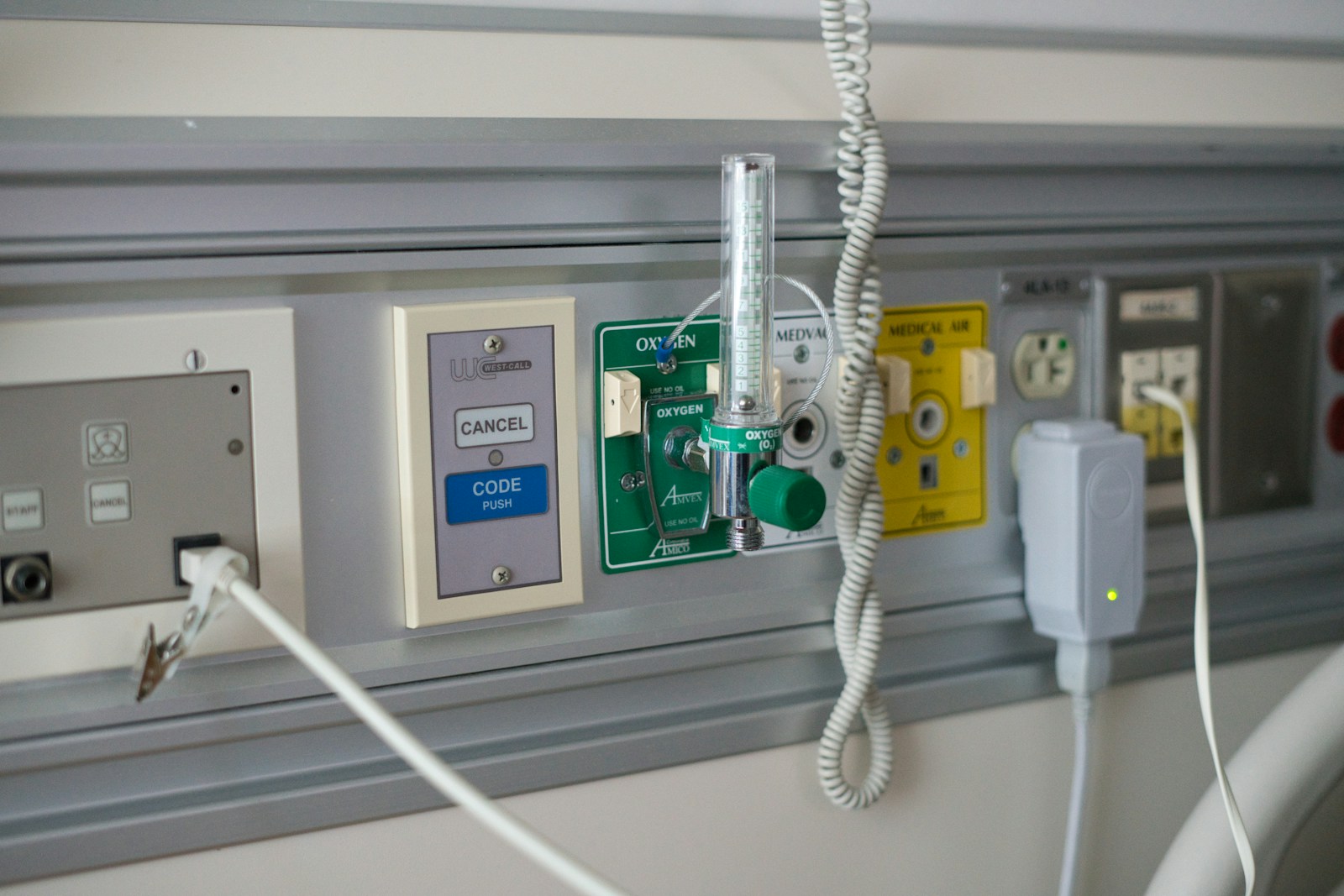
- Area alarms — installed at nurses' stations or in corridors, downstream of each zone valve. They watch the pressure in one clinical zone, such as a ward, an ICU, or a group of operating theatres, so nursing staff see the supply conditions at their own bedsides.
- Local gauges and integrated alarms — analog or digital gauges at key points in the pipeline, and some valve boxes that build a pressure sensor and an audible/visual alarm into the same wall unit.
Together, these levels cover the whole journey of the gas: from the source, through the pipeline, to the point of care.
What Happens After the Alarm Sounds
The alarm is only useful if staff respond with a clear plan. In practice, the response follows the same pattern in most hospitals:
- Staff read the panel to see which gas and which limit triggered the alert.
- They check the relevant source equipment — for example, whether the manifold has switched to the reserve bank.
- They switch to backup supply or call the engineering team, before the fault reaches the bedside.
- The panel records the event with a time stamp, so engineers can later find the cause, not just the symptom.
Many panels also connect to the building management system (BMS) through dry contacts or a network protocol, so a duplicate alert reaches the security desk even when the plant room is empty.
Why Commissioning and Regular Testing Matter
An alarm system only protects patients if it is set up and maintained correctly. At commissioning, engineers verify each sensor, set the high and low limits, and test every light and sounder. After that, the panels enter a planned maintenance regime with periodic functional tests, including a check of the battery backup so monitoring continues during a power cut. Buyers should always ask suppliers for commissioning records and test procedures, not just the hardware.
What Buyers Should Check Before Ordering
- How many gases and channels each panel must cover
- Display type and readability for the installation location
- On-site set-point adjustment and calibration support
- Battery backup duration and low-power indication
- BMS or remote monitoring protocol compatibility
- Compliance with ISO 7396-1, NFPA 99, or HTM 02-01 for your market
- Factory test reports and English compliance documents
You can see a working example in our medical gas pressure detection alarm system, explore the full centralized oxygen supply product range, or visit the NUOVAMED homepage to learn how our equipment covers the whole chain from source to bedside.
In Summary
A medical gas alarm system works in three steps: a sensor measures the pressure of each gas, the panel compares the reading with safe limits, and an audible and visual alert calls staff the moment a reading moves out of range. Master alarms guard the source, area alarms guard each clinical zone, and event logs help engineers find causes. For buyers and distributors, choosing alarms with the right coverage, latched indication, battery backup, and standard compliance is one of the simplest ways to raise the safety level of a hospital project.


