The Vital Role of Medical Gas Systems
News Details
Every successful surgery, every patient on a ventilator, and every emergency response relies on an invisible system working in the background. Medical gas systems supply the oxygen, medical air, and suction that modern care depends on. This article explains why these systems are so important, what benefits they bring to a hospital, and what buyers should check before choosing one.
Why Medical Gas Systems Are Critical in Hospitals
The importance of a medical gas system in hospital settings comes down to one simple fact: when gas supply stops, care stops. Oxygen keeps patients breathing. Medical air powers ventilators. Vacuum removes airways during surgery. These services must be available every minute of the day, in every department.
A medical gas system provides this support through a central supply that eliminates the need for staff to carry cylinders through corridors. It turns gas delivery into a building service as reliable as electricity or water.
Key Benefits of a Central Medical Gas Supply System
- Continuous supply — a central medical gas supply system delivers uninterrupted oxygen throughout the hospital, with no downtime for cylinder changes.
- Improved safety — fewer cylinders in wards means reduced handling risks, fewer leaks, and lower fire loads.
- Reduced operating costs — over time, centralized production and bulk supply are more cost-effective than repeated cylinder deliveries and reduce gas waste.
- Smooth workflow — staff can plug equipment into wall outlets and begin work immediately.
- Space-saving — beds and operating rooms are kept clear of cylinder racks, freeing up space for clinical teams to work.
- Simplified compliance — a well-designed system is built to recognized standards, supporting hospital audits and accreditations.
How the System Protects Patient Safety
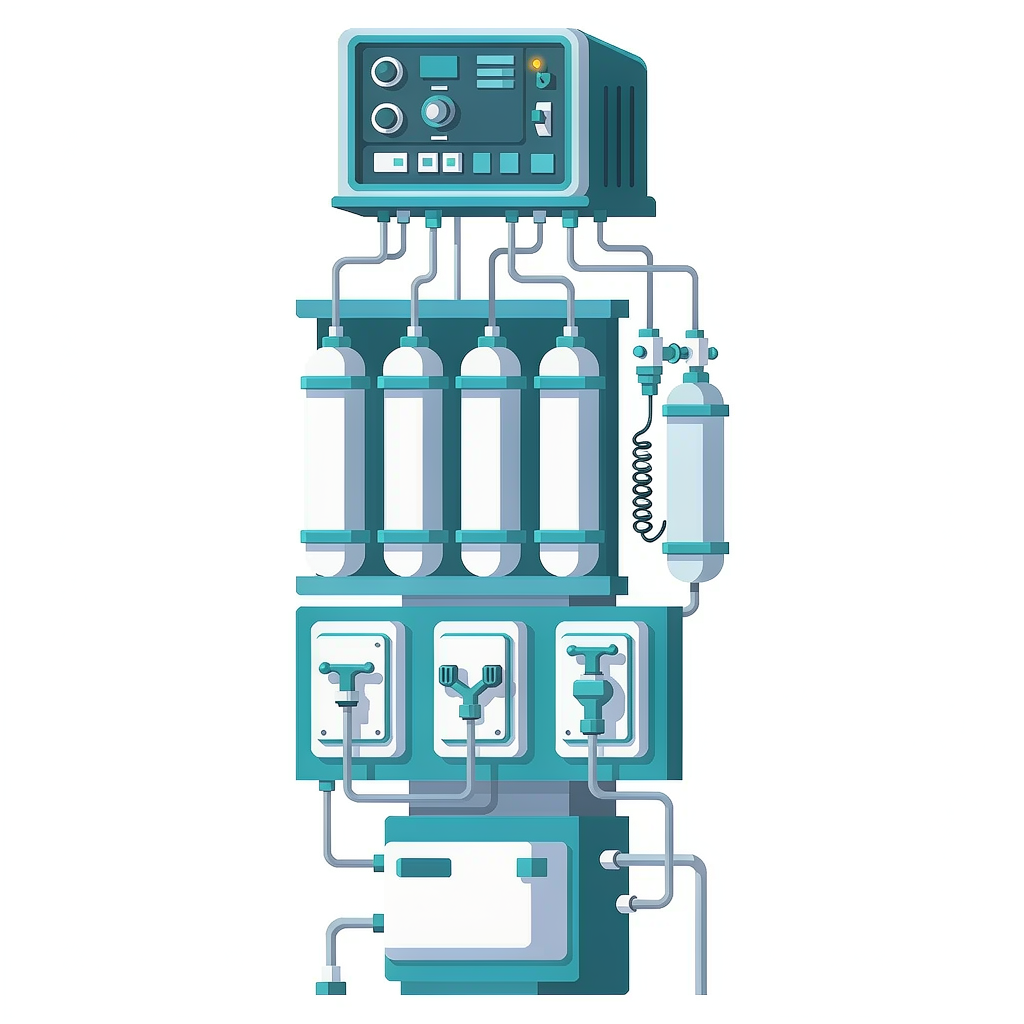
A high-quality piping system does more than just deliver gas. It is designed to detect problems early and maintain supply in the event of a fault.
- Alarm panel — alerts staff immediately when pressure deviates from the normal range, before any risk to patients arises.
- Backup sources — dual systems and backup cylinder banks maintain supply during maintenance or failures.
- Gas-specific outlets — make it physically impossible to connect a hose to the wrong gas.
- Area valve — isolates any problem to a single ward, while the rest of the hospital continues to function.
Where Hospitals Use Medical Gas Systems Every Day
- Operating room — anesthesia, surgical suction, and instrument air supply
- ICU and NICU — oxygen, medical air, and vacuum for each bed
- Emergency Room — immediate supply of oxygen and suction for resuscitation
- General ward — bedside sockets for routine respiratory care
- Delivery and birthing rooms — oxygen and nitrous oxide for mothers
- Laboratories and dental units — controlled gas supply for daily operations
Compliance Builds Buyer Trust
Standards such as NFPA 99, ISO 7396-1, and HTM 02-01 set clear guidelines for piping system design, installation, testing, and alarms. These standards exist because medical gas errors can harm patients. When evaluating suppliers, request compliance documentation and test reports. A supplier who can demonstrate how their equipment meets these standards is a supplier you can build a long-term partnership with.
What This Means for Buyers and Distributors
For global buyers and wholesalers, the benefits of a medical gas pipeline system translate directly into project value: safer facilities, lower operating costs, and smoother approvals. Before selecting a system, consider the following:
- Compliance with applicable standards in your market
- Redundancy in the design of the source equipment
- Copper pipe and fitting quality
- Alarm coverage in all critical care areas
- Installation, testing, and after-sales support
If you want the technical details explained step-by-step, read our companion article on how medical gas systems work, from the central source to the bedside outlet.
In Summary
Medical gas systems are the silent lifelines of every modern hospital. They deliver continuous, safe, and compliant gas supply to the point of care, protect patients through alarms and backup systems, and reduce costs for facility owners. For buyers and distributors, selecting a well-designed system is one of the most valuable infrastructure decisions a hospital project can make.


